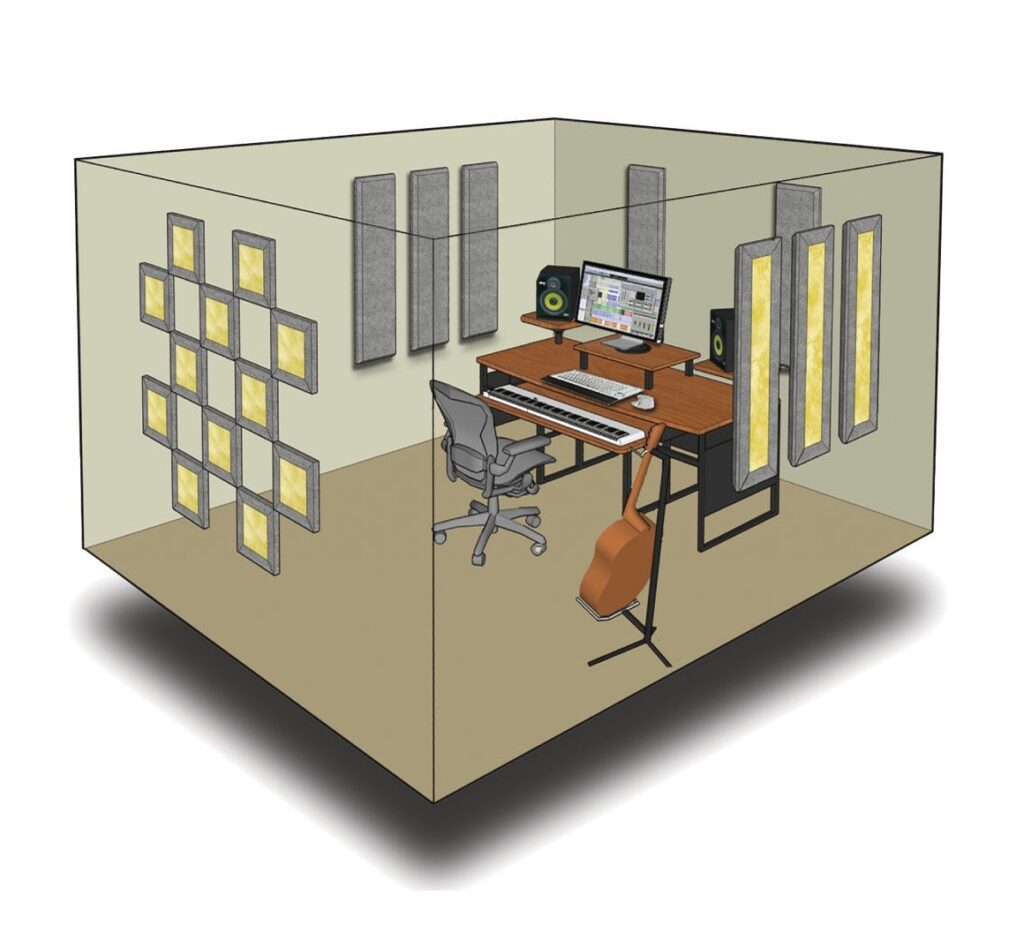
The purpose of acoustic treatment is to improve the quality of sound in the room. It make the actual recordings sound better and the mixing process too. Acoustics Treatments is very important than the equipment’s you use to record the track on.
Why Acoustic Treatment is Necessary ??
Sound waves travel fast. Fast enough so that what you think you’re hearing from your speakers has already been colored by the surrounding space due to reflection from the walls. ( Assume Sound is like a ball. When the ball bounces inside a closed room, it bounces of each and every wall, so does sound) . An untreated room has a frequency response – the way it reflects sound back – that is uneven. In short, that means what your ears are telling your brain isn’t true. It’s like taking a photograph of a tree in a field and adjusting the brightness and contrast, then applying a color filter. The outcome is a landscape you still recognize, but it isn’t a true representation.
Core Methods of Acoustic Treatment
Absorption (Controlling Reflection)
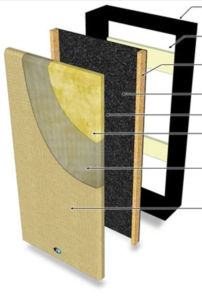
Absorbs sound energy (especially mid and high frequencies) and reduce echo, reflections, and reverberation. Material composition is Rockwool, made from melted volcanic rock spun into dense fibers. Used for Bass traps, professional studios, high-end absorption. For budget-based home studios, Mineral Wool & Acoustic Foams are used.
Diffusion/ Diffusor (Managing “Liveliness”)
Diffusers are designed to scatter sound reflections in different directions so a room sounds natural, spacious, and balanced. Types of diffusers are;
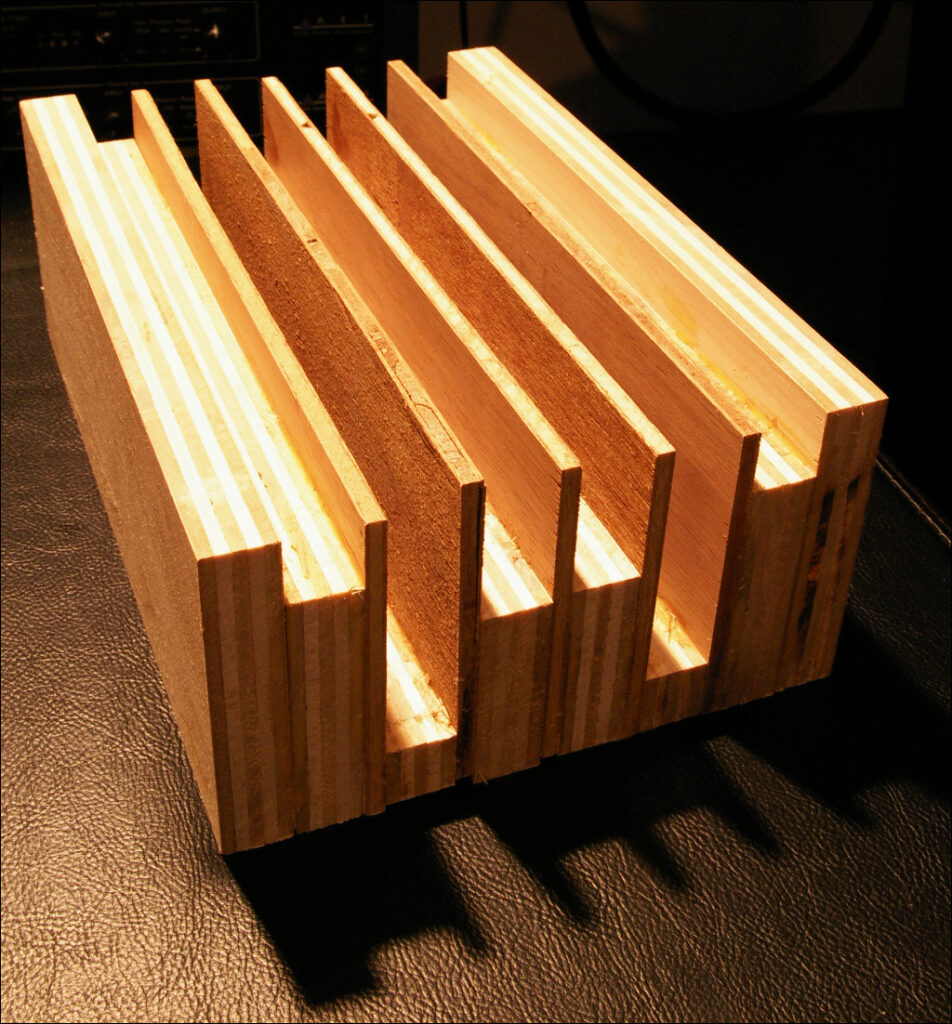
- Quadratic Residue Diffusers (QRD) – Uses wells (slots) of different depths to scatter sound, 1D (Horizontal/Vertical)
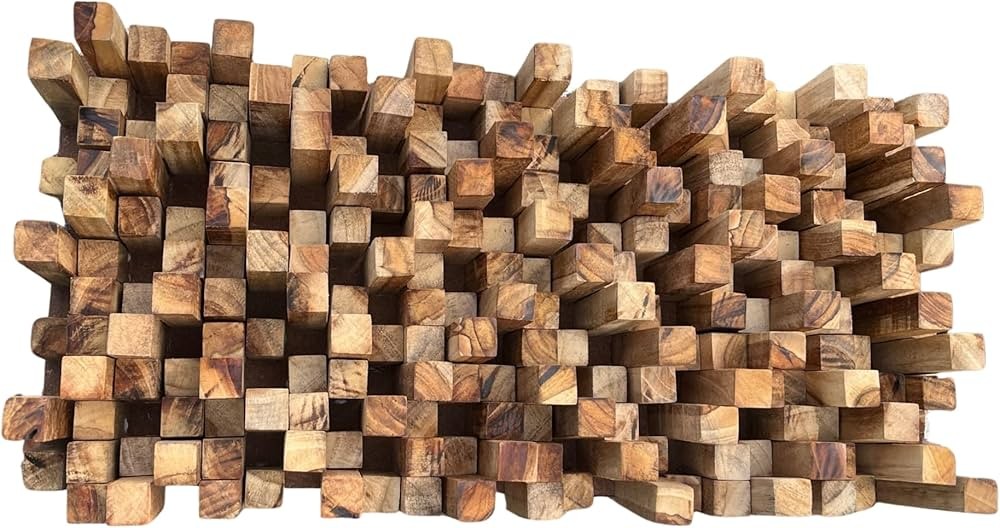
Skyline Diffuser (2D Diffuser) – Diffuses sound in both horizontal and vertical directions, this provides a more hemispherical diffusion pattern.
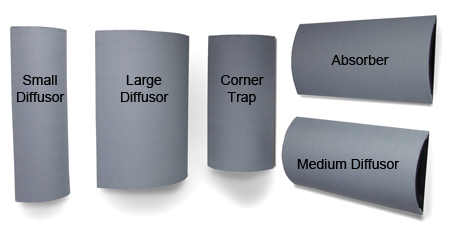
Poly-cylindrical Diffuser (Curved Diffuser) – Curved surface reflects sound in multiple directions, Large performance spaces or studios that need to maintain a natural, non-directional sense of “liveliness” without high-frequency harshness.
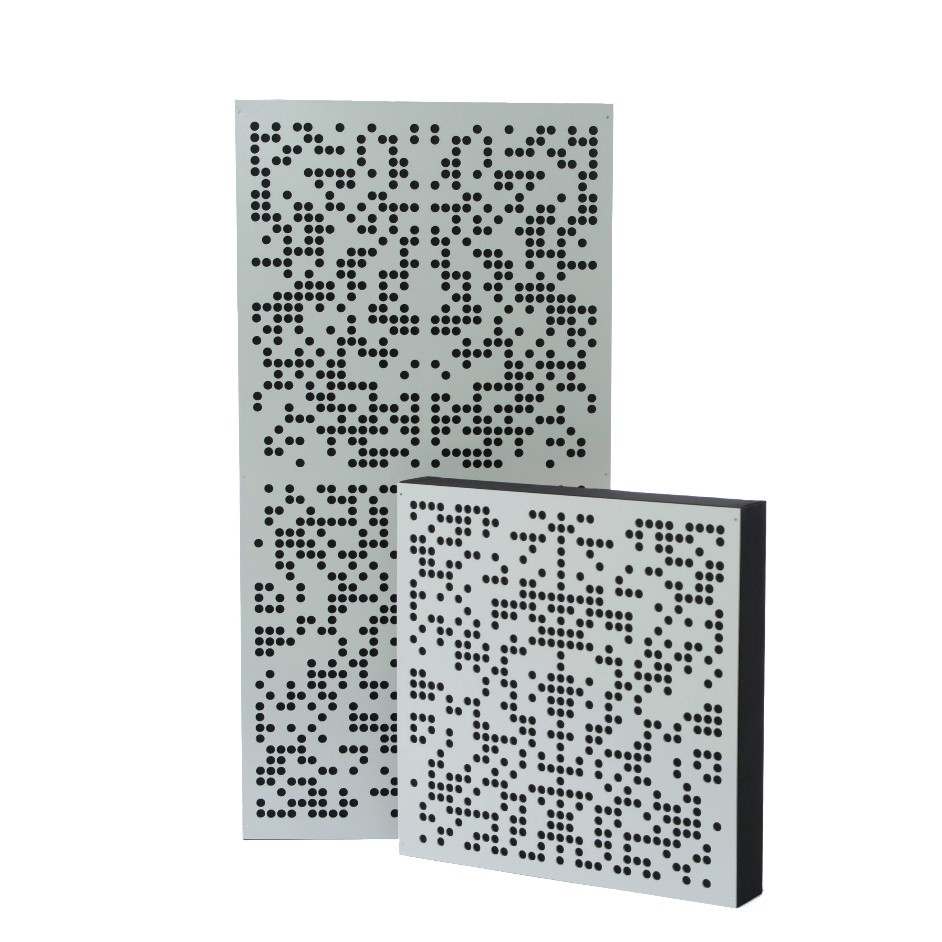
Binary Amplitude Diffusers (BAD) – These are a modern hybrid approach. They look like a flat panel but have a computer-generated pattern of holes (a binary sequence) drilled into them.
Bass Trapping (Controlling Low Frequencies)
Low frequencies are the most difficult to manage because they have long, powerful wavelengths that congregate in corners. These use a sealed box with a heavy, flexible membrane (like a mass-loaded rockwool) inside. When the sound hits the membrane, it vibrates, converting the low-end energy into motion.

Conclusion
Unless you acoustically treat your studio well, the music and the mixes that you make in the studio wont translate very well in the real world, that’s where most people listen to it.
Check the following link to view few acoustic recording studios in chennai.
To know more about studio acoustics, speaker placements, studio calibrations & studio workflows of recording mixing and mastering, register to our Sound Engineering and Music production courses .
Soundpoint Pro ranks to be one of the best sound sound engineering academy in chennai and Music Production academy in chennai.